
Our research mainly focusses on smart fiber and textile materials for personalized healthcare, including human body thermoregulation, textile sensors, and porous nanofibers for gas absorption, etc. To realize these specific goals, our group applies fundamental scientific principles to rationally design the fiber photonic, electrical, and/or mechanical properties. These properties are further realized through polymer molecular engineering and fiber-yarn-textile multi-scale development. We aim to develop sustainable wearable systems to contribute to the wellbeing of human beings.
Wearable textiles for personal thermoregulation
As the second skin of human body, textiles represent the most direct and ubiquitous platform for personal thermoregulation. As climate change intensifies, thermoregulation textiles are increasingly needed to protect individuals from heat-related health risks while reducing the growing energy consumption associated with air-conditioning systems. We aim to develop spectrally engineered textiles for static and dynamic thermal management through molecular design, advanced spinning, and photonic engineering, providing sustainable solutions for enhancing human climate resilience while lowering cooling-related energy consumption.
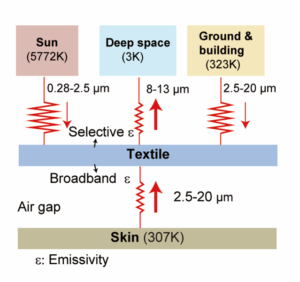
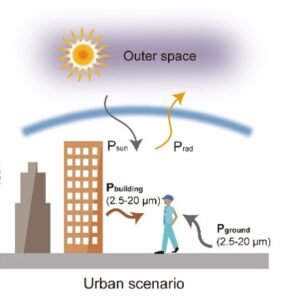
R. Wu, et al. P-C Hsu*. Spectrally engineered textile for radiative cooling against urban heat islands. Science. 2024, 384,1203-1212. DOI: 10.1126/science.adl0653
Jia S†, R. Wu †, Zahra S M, et al. Spectrally Selective Daytime Radiative Cooling Coating. Advanced Materials, 2026: e73578.
Smart textiles for energy and healthcare
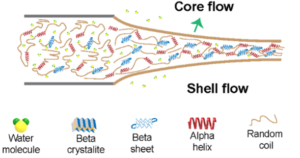
As the fundamental building blocks of textiles, fibers offer a unique platform for seamlessly integrating electronic functionalities into everyday garments. Our research employs advanced spinning technologies and mesoscale structural engineering to create multifunctional electronic fibers capable of sensing, energy harvesting, and signal transmission. These fibers can be woven into smart textiles for continuous monitoring of human motion and physiological signals, enabling comfortable, unobtrusive, and long-term wearable healthcare systems for the emerging era of AI and the Internet of Things.
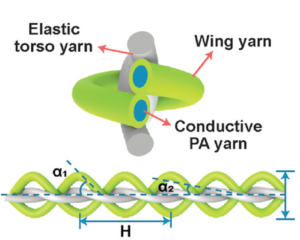
R. Wu, et al. Z. L. Wang*. Industrial fabrication of 3D braided stretchable hierarchical interlocked fancy-yarn triboelectric nanogenerator for self-powered smart fitness system. Advanced Energy Material 2022: 2201288. doi.org/10.1002/aenm.202201288
R. Wu, et al. T. Kim*. Spider-inspired regenerated silk fibroin fiber actuator via microfluidic spinning. Chemical Engineering Journal 2022, 444: 136556. doi.org/10.1016/j.cej.2022.136556
Nanofiber air filters for direct air capture of CO2
Atmospheric CO₂ accumulation is a primary driver of climate change, creating an urgent need for scalable carbon-removal technologies. Our research focuses on nanofiber-based direct air capture (DAC) filters that combine ultrahigh surface area, tailored adsorption chemistry, and efficient photothermal regeneration. These lightweight and breathable fibrous filters can be integrated into building ventilation systems to continuously capture CO₂ from ambient air with minimal airflow resistance. By leveraging existing building infrastructure, we seek to transform ventilation networks into distributed carbon-removal systems for sustainable urban environments.
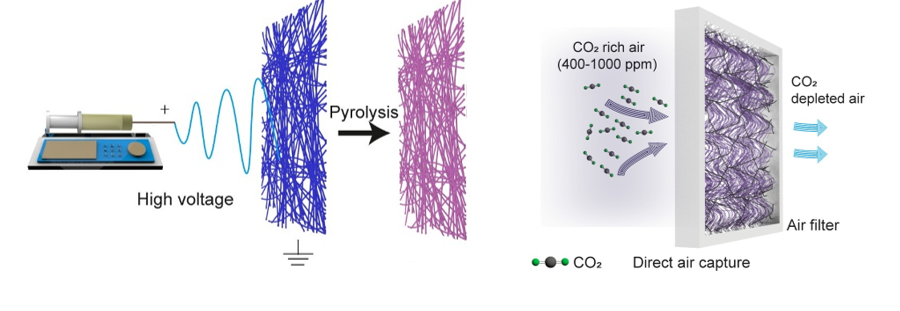
R. Wu, et al. P-C Hsu*. Distributed direct air capture by carbon nanofiber air filters. Science Advances 2025, 11(42): eadv6846. DOI: 10.1126/sciadv.adv6846
Y Chen, R. Wu, PC Hsu. Perspective on distributed direct air capture: what, why, and how? npj Materials Sustainability 2025, 3 (1), 12.
Fiber and textile upcycling
The textile industry generates approximately 10% of global carbon emissions and produces over 120 million tonnes of discarded clothing annually, with the vast majority ending up in landfills or incineration. Despite their intrinsic value, natural fibers are rarely recycled into new products due to degradation during use and recycling processes. We transform discarded natural textiles into high-value functional fibers through mechanical, chemical, and enzymatic recycling combined with advanced spinning and structural reconstruction strategies. By restoring material performance and introducing functionalities such as thermal management, antibacterial activity, sensing, and energy storage, our research aims to establish scalable pathways for circular textile manufacturing and sustainable resource utilization.
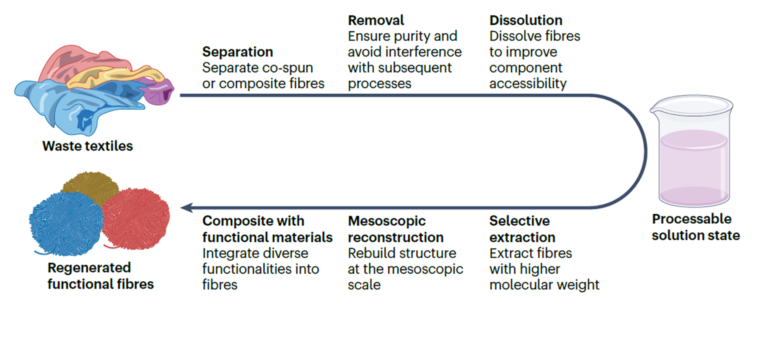
Huang Y, Li G, Wu R*. Upcycling textile waste into sustainable functional fibres. Nature Reviews Bioengineering, 2025: 1-3. DOI: doi.org/10.1038/s44222-025-00396-1